Documents List

Displaying 121 - 126 of 126 Documents | Table View
| January 1986
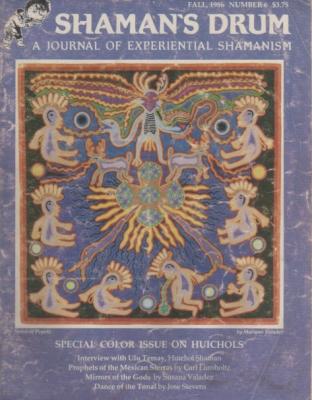
In 1986, Shaman's Drum, dedicated an issue to Wixarika art and spirituality, featuring an archival article from Norwegian ethnologist, Carl Lumholtz, an interview with Wixarika mara'akame Ulu Temay, and a text written by U.S. anthropologist, Susan Valadez (née Eger).
| December 1979
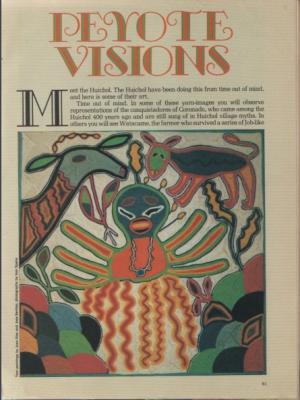
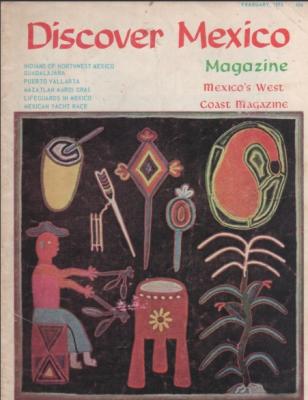
Brief article from the psychedelic and counterculture U.S. magazine, High Times, focusing on their art and "mythic-like" people who have resisted colonialism. Illustrated with paintings from José Benítez and Juan Ríos.
| April 1979
"The images have the crude ferocity of ancient mythology: warriors brandish their weapons at fleeing victims; immense deities loom over their worshipers: otherworldly beats roam fantastic gardens.  Produced by pressing brightly colored yarn onto waxed wooden panels, these images indeed have their sources in centuries-old tradition. But the art in which they appear, practiced by a small group of México´s Huichol Indians and known as yarn painting, is in fact the product of a unique collaboration between the descendants of an ancient culture and the world of modern anthropology."
| February 1979
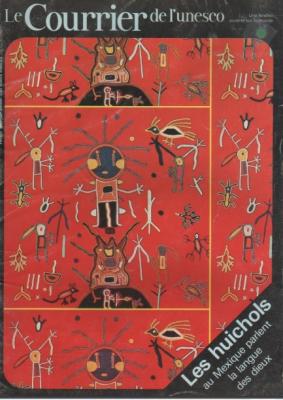
Article written by Juan Negrín for the UNESCO's magazine in 1979 detailing important aspects of Wixarika history and culture as part of one of the first international exhibits of Wixarika contemporary art. The article also details the art work of key creators of the period like José Benítez Sánchez, Guadalupe González Ríos and Juan Ríos Martínez. The cover illustrates González Ríos' masterwork, The Birth of the Sun (1978).
| January 1975

"The Huichol Indians have maintained their cultural traditions at a level of integrity far above most pre Columbian societies still existent in Mexico. Living in the rugged and remote hightlands of Jalisco and Nayarit, they have not had to cope over time with the same kind of inroads on their belief systems and daily living as did the linguistically related Indian groups living in the less remote and rugged highlands and lowlands in the same general area."

| May 1966

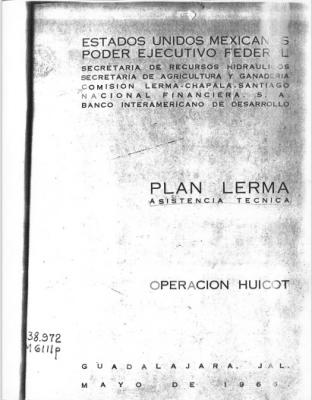
Complete document for the Plan Lerma-Operación Huicot, named as a reference to its intervention in the region occupied by the nombrado Huichol (Wixárika), Cora (Na'ayeri) and Tepehuan (O'dam) peoples. The Plan Huicot was the first major government infrastructure project in the Western Sierra Madre and was based on the Indigenista state ideology and its "Indigenista action plans" that sought to assimilate Indigenous peoples through schools, roads and small markets run by the government. 

Read the full Spanish language archive here.