Culture

Sort by
Order
| November 2025
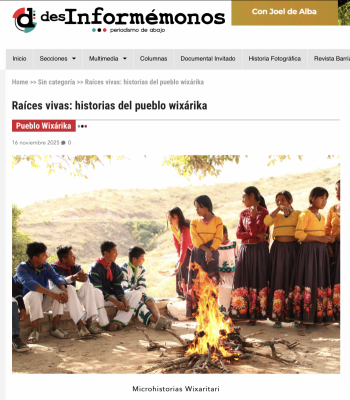
This article includes audiovisual material created by various members of the Wixárika people, addressing topics such as youth, education, gender, and culture. The text was written by the Coca historian Rocío Moreno as part of her series on Indigenous peoples and trans-territorial struggles in Desinformémonos.
| January 2024

The Huichol or Wixárika people are one of the 68 original populations that make up the multicultural nation called Mexico. Various foreign and Mexican researchers have considered the Huichol or Wixaritári an artist society. At the beginning they made ritual and utilitarian objects of great plastic beauty, which during the last 70 years have not ceased to have these functions. However, currently they have also undergone a commercialization process.

| January 2023
Understanding the coloniality of gendered lives, family dynamics, social arrangements, and political structures in Indigenous Wixárika communities in Jalisco State, Mexico begins with confronting and interrogating a history written largely by and for men in positions of power. The archives are limited in terms of what can be gleaned about gender equality and what existed before the proliferation of European patriarchy. Joan Scott (1988) argued that the incorporation of gender as a category of analysis should elucidate the integral role that women have played in the historical process, rather  than forming the basis of a specific chapter about women.
| December 2022

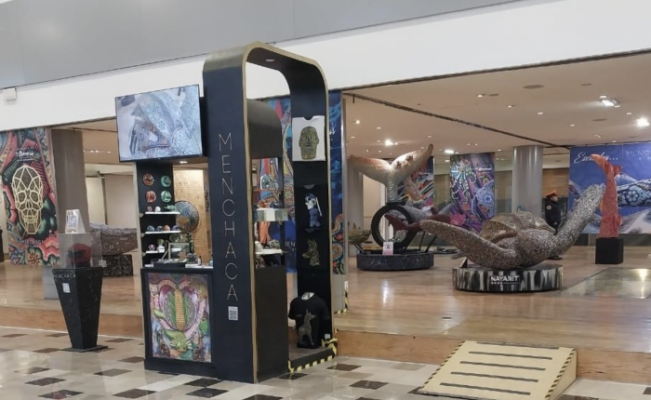
"In recent decades, Wixarika art has become so popular that "yarn paintings" and figures made with beads (small, multicolored glass beads) can be found in places as diverse as subway platforms, souvenir shops, Mexican flea markets and street stalls, and prestigious galleries around the world.

| January 2022

Traditional mycological knowledge (TMK) is complex, not distributed equally among the entire population, and constantly adapting to current social situations. There are sociocultural factors that could influence the fact that some people retain a greater wealth of knowledge, for instance, cultural affiliation, migration, occupation, level of schooling, and person’s age.

| November 2021
On December 18, Mexico City and neighboring Mexico State entered a weeks-long coronavirus lockdown for the first time since the spring. The next evening, I hid in a sleeping bag surrounded by people vomiting in a small park near the famed Teotihuacán pyramids outside the capital, as dozens consumed the psychedelic peyote cactus at a clandestine ceremony.
| January 2021
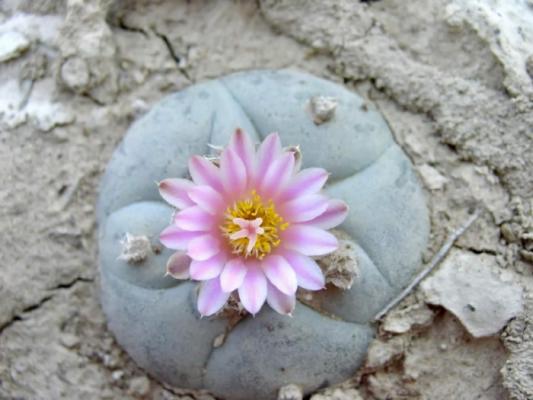
“Let’s Talk About Hikuri” (‘Hablemos de Hikuri’) is a project that was designed to create spaces for dialogue about hikuri (Lophophora williamsii), or peyote, in order to provide debates and reflections on the use and consumption of this cactus and consider proposals for its protection and use.
| January 2021
In this article, we analyze the worldview of the Wixárika people in terms of their care of nature, or “Mother Earth”. We do so by accompanying them in their sacred spaces and daily life in order to identify their beliefs, rituals, and their relationship with caring for nature, so as to elaborate an intercultural proposal to mitigate climate change. A qualitative ethnographic methodological design is applied, and cases of patriarchal Wixárika families are selected as key informants, with whom we conducted dialogue workshops, in-depth interviews, and ethnographic observation of rituals in sacred places. The results show that the Wixárika ethnic group bases its worldview on rituals that visit the five important cardinal points of their culture located in the east, west, north, south, and center of the western region of Mexico. These, in turn, are home to elements of their worldview such as the sun (Tayau Tau), the sea (Haramara), corn (Icu), peyote (Hicuri), deer (Maxa), and fire (Tatewari). From their perspective, the planet and life arise through the relationship between the sea and the sun, which gave birth to snakes that evolved into rivers, animals, and human beings that passed through sacred places. We conclude on the importance of recovering the worldview expressed in the rituals of this tribe in order to build an intercultural proposal on the preservation of the biodiversity of nature, or “Mother Earth”, and to limit climate change from a deep ecology perspective.
| June 2020
Article detailing the impacts of the "Psychedelic Rennaissance" on peyote conservation, peyote politics and the appropriation of Wixarika culture by global consumers.
| January 2020
In the Wixarika community El Colorín, in the municipality of El Nayar, Nayarit, México, two economic-productive activities are mainly carried out: fishing and the elaboration of Wixarika art. There is also incipient tourism and ingrained but depleted livestock, as well as an almost extinct agriculture. But this has not always been the case, due to at some point agriculture predominated and at another time craftsmanship. In order to understand the transformations and re-accommodates that happened to reach what is now happening in El Colorín, it is proposed to analyze the everyday life in the Aguamilpa region, from the socialized individual in a particular space and time, based on the figure of José Ríos (Mats+wa), from a microsocial scale. To this purpose, the ways of life, especially from two periods, are presented as photographs showing the way in which it has been living in the region.